 ×
×
As the global demand for sustainable and cost-effective energy storage solutions continues to rise, sodium-ion (Na-ion) batteries have emerged as a compelling alternative to traditional lithium-ion technologies. With abundant raw materials, lower environmental impact, and promising performance metrics, Na-ion batteries are gaining traction across electric vehicles (EVs), grid-scale energy storage, and consumer electronics. However, not all sodium-ion batteries are created equal. Understanding the different types—classified primarily by their cathode and anode chemistries—is essential for engineers, investors, and industry stakeholders looking to harness their full potential. In this article, we explore the major classifications of sodium-ion batteries, highlighting their unique characteristics, advantages, and applications.
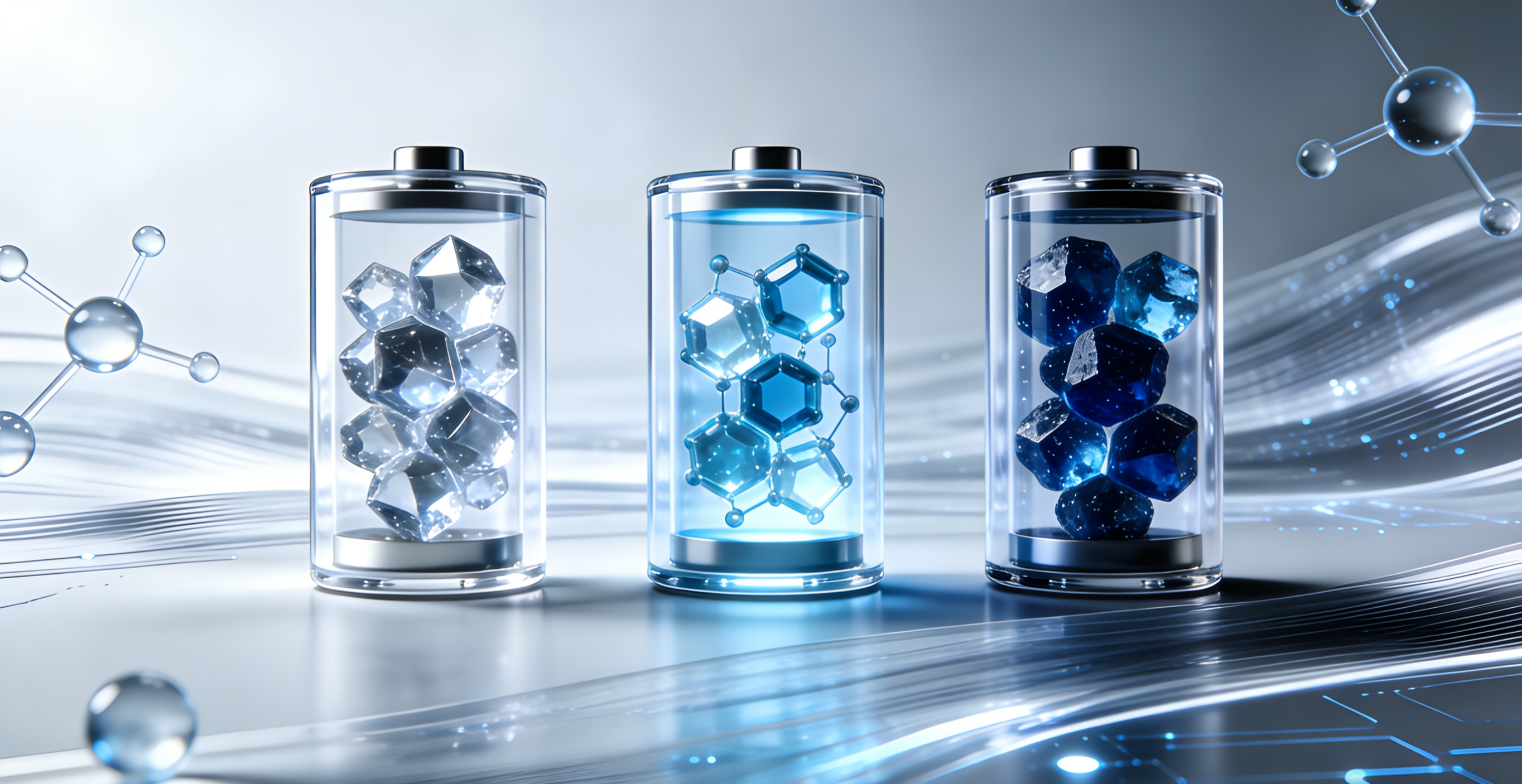
One of the most widely studied cathode materials for sodium-ion batteries is the layered transition metal oxide family, typically represented as NaxMO₂ (where M = Mn, Fe, Ni, Co, or a combination thereof). These materials share structural similarities with the cathodes used in lithium-ion batteries but are optimized for the larger ionic radius of Na⁺ ions.
- O3-type: This structure features sodium ions occupying octahedral sites in an ABCABC oxygen stacking sequence. O3-type cathodes often deliver high specific capacities (up to 160 mAh/g) but may suffer from phase transitions during cycling, which can affect long-term stability.
- P2-type: In contrast, P2-type cathodes adopt an ABBA oxygen stacking with prismatic sodium sites. They generally offer better rate capability and structural stability, especially when manganese-rich compositions are used. Recent advances have improved their cycle life, making them suitable for stationary storage applications.
Layered oxides are favored for their high energy density and relatively mature synthesis processes, though challenges remain in mitigating transition metal dissolution and optimizing voltage hysteresis.
Polyanionic cathodes, such as phosphates (e.g., Na₃V₂(PO₄)₃), fluorophosphates (e.g., NaVPO₄F), and sulfates, leverage strong covalent bonding within their frameworks to achieve excellent thermal and electrochemical stability.
- NASICON-type (e.g., Na₃V₂(PO₄)₃): Known for its 3D ion diffusion pathways, NASICON offers high ionic conductivity and remarkable cycle life—often exceeding 10,000 cycles. While its operating voltage (~3.4 V vs. Na⁺/Na) and moderate capacity (~117 mAh/g) limit energy density, its safety and longevity make it ideal for grid storage and backup power systems.
- Fluorophosphates: Materials like NaVPO₄F combine high voltage (~4.0 V) with good capacity (~140 mAh/g), bridging the gap between energy density and stability. However, vanadium-based compounds raise cost and toxicity concerns, prompting research into iron- or titanium-based alternatives.
Polyanionic cathodes excel in safety-critical applications due to their robust crystal structures and minimal oxygen release under abuse conditions.
Prussian blue analogs, with the general formula AxM[Fe(CN)₆]y·zH₂O (A = Na⁺; M = Fe, Mn, Ni, etc.), feature an open-framework structure that facilitates rapid sodium-ion insertion/extraction.
- PBAs offer ultra-fast charging capabilities and decent theoretical capacities (up to 170 mAh/g).
- Their simple aqueous synthesis route enables low-cost, scalable production.
- However, structural water and lattice vacancies can compromise cycling stability and Coulombic efficiency.
Despite these challenges, companies like CATL and Northvolt are actively developing PBA-based Na-ion cells for EVs and renewable integration, thanks to their high power density and compatibility with existing manufacturing infrastructure.
While cathode chemistry defines much of a battery’s performance, anode selection is equally critical:
- Hard Carbon: The dominant anode material for commercial Na-ion batteries, hard carbon provides a disordered structure with nanopores that accommodate Na⁺ ions. It delivers reversible capacities of 250–300 mAh/g and reasonable cycling stability. Research focuses on optimizing precursor materials (e.g., biomass, pitch) to enhance initial Coulombic efficiency and reduce costs.
- Alloy-Based Anodes (e.g., Sb, Sn, P): These offer very high theoretical capacities (e.g., 660 mAh/g for Sb) but suffer from large volume expansion (>300%), leading to mechanical degradation. Nanostructuring and composite designs are being explored to mitigate this issue.
- Intercalation Compounds (e.g., TiO₂, Na₂Ti₃O₇): Though lower in capacity, these materials provide exceptional cycle life and safety, making them suitable for niche applications where longevity trumps energy density.
The rich diversity of sodium-ion battery chemistries lays a robust foundation for crafting tailored energy storage solutions across a broad spectrum of industrial and consumer sectors. Different material systems exhibit distinct performance characteristics, making them uniquely suited to specific operational demands and use cases. High-energy-density O3/P2 layered oxides, for instance, stand out with their superior charge-discharge efficiency and exceptional energy retention capabilities. These attributes make them particularly well-suited for dynamic mobility applications, ranging from electric passenger vehicles and commercial trucks to portable power tools that require reliable, long-lasting power output. Meanwhile, structurally stable polyanionic compounds boast an impressive cycle life and outstanding thermal safety, which have positioned them as the dominant choice for large-scale stationary energy storage systems—including grid-level backup facilities and renewable energy integration projects that demand consistent performance over extended periods. Prussian blue analogs (PBAs), on the other hand, excel in fast-charging scenarios thanks to their rapid ion diffusion kinetics, catering to scenarios where quick energy replenishment is a top priority. As global research and development efforts accelerate and upstream supply chains for key raw materials mature, the strategic selection of the right battery chemistry, precisely aligned with specific application requirements, will become the pivotal factor in unlocking the full commercial viability of sodium-ion battery technology. For both technology innovators and industry adopters, a thorough understanding of these material classifications is far from a mere academic exercise; it serves as the foundational cornerstone for developing the next generation of cost-effective, eco-friendly, and sustainable energy storage solutions.
Juguang Industrial Zone, Tiancheng Sub-district, Yueqing City, Wenzhou City, Zhejiang Province.
Copyright © Zhejiang Mingtu Electrical Technology Co., Ltd All Rights Reserved Privacy Policy Blog

 EN
EN


 Hot News